What this system does
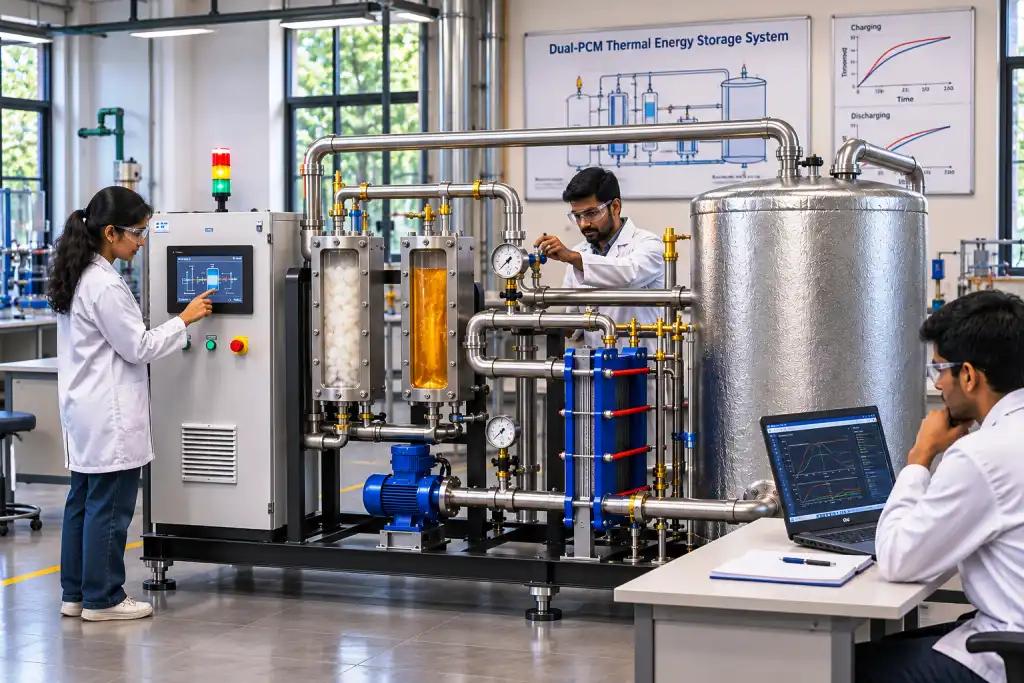
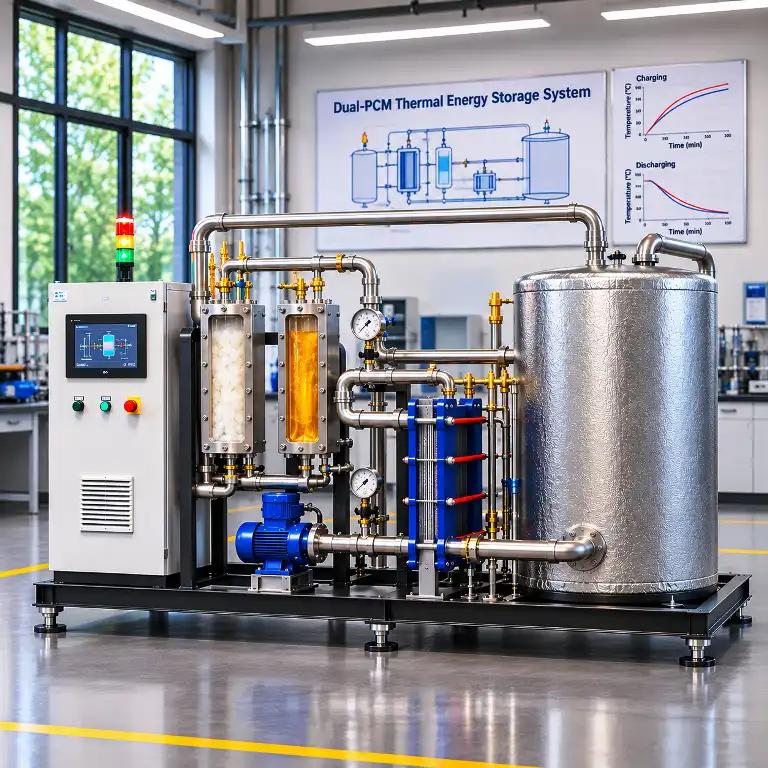
Hydrogen, solar heat and wind all share one weakness: supply rarely matches demand. Storage is what fixes that, and heat is the cheapest energy to store. This system lets students explore latent heat storage hands-on. A 50 litre stainless steel tank with two 3000 W heaters warms the circulating water. That hot water passes through three copper heat exchangers set inside PCM shells. As the material melts it soaks up heat at a nearly constant temperature, and as it solidifies it gives that heat back. Two PCMs are fitted, so students can compare a paraffin wax with a fatty acid, or link them one after another to see how a layered setup behaves. A viewing arrangement shows the melting front directly. Sensors and a flow meter record every run for later calculation. The unit is designed for indoor lab use.
What's included
Experiments this system enables
Technical features
Dual PCM storage
Two materials with different melting points sit side by side for direct comparison
Cascade mode
Chain the two PCMs to see whether a layered store outperforms a single material
Swappable storage
The PCM section can be replaced, so new materials can be tried later
Adjustable test conditions
Set the water temperature, the fluid and the flow rate for each run
Visible melting
A viewing arrangement lets students watch the material change state
Solar ready
Connects to a solar thermal source such as a parabolic trough collector