H₂ Products

All Products
Electrolyzers
Fuel Cells
H₂ Leak Detectors
Dew Point Meters
Hydrogen Purity Analyzers
Mass Flow Controllers
Digital Pressure Gauges
MEA & Materials

Can't find what you need? We source custom components.

Custom Request →
Fuel Cell based systems
H₂ Products · Fuel Cells

PEM Fuel Cells & Fuel Cell Stacks

Air Cooled · Liquid Cooled · Drone · Bicycle · Vehicle

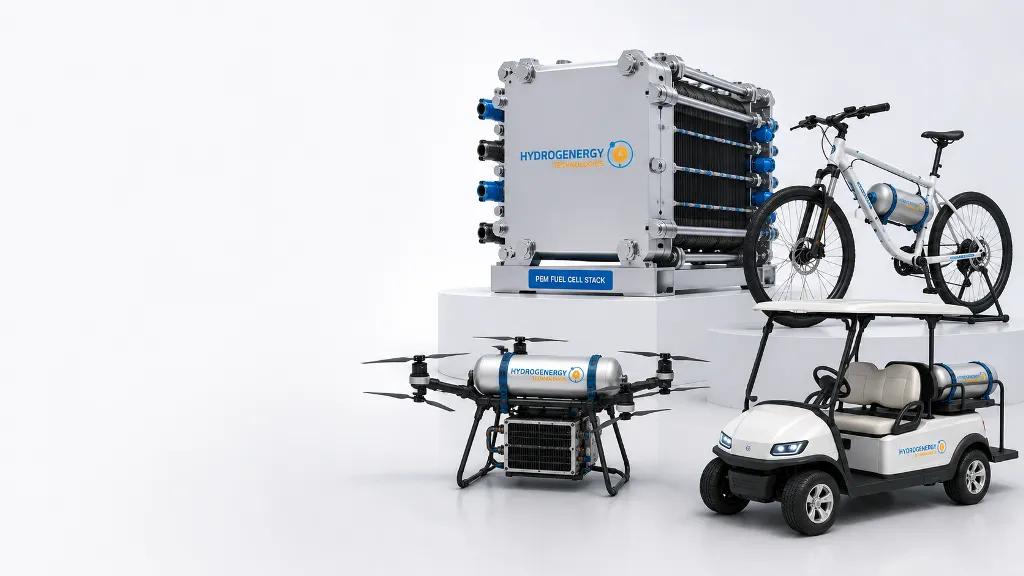
Hydrogen-to-electricity conversion for stationary, mobile and speciality applications. Air cooled and liquid cooled PEM fuel cell stacks, plus purpose-built systems for drones, bicycles and vehicles — from a single technical supplier with full specifications and application support.

What is a Fuel Cell?

Hydrogen in. Clean power out.

A fuel cell is an electrochemical device that converts hydrogen directly into electricity, with water and heat as the only byproducts. It generates power continuously as long as hydrogen is supplied — no combustion, no moving parts, no emissions.

The heart of a fuel cell is the membrane electrode assembly (MEA) — a proton exchange membrane sandwiched between two catalyst-coated electrodes. At the anode, hydrogen splits into protons and electrons. Protons cross the membrane; electrons travel through an external circuit producing usable current. At the cathode, protons, electrons and oxygen recombine to form water.

Single cells produce low voltage. Multiple cells stacked in series form a fuel cell stack — delivering the voltage and power output required for the application. Around the stack, balance-of-plant components manage hydrogen delivery, air supply, thermal regulation and power conditioning.

Fuel cells are available in two primary cooling configurations: air cooled, suited to lower power ranges where passive or fan-assisted cooling is sufficient; and liquid cooled, required for higher power stacks where active thermal management is necessary for sustained performance. Beyond stationary and research stacks, purpose-engineered fuel cell systems are available for drones, bicycles and hydrogen vehicles — each optimised for the weight, form factor and duty cycle of the target platform. Hydrogenergy supplies all five product lines with technical guidance for system integration.

Which fuel cell is right for you?

Compact stack for low-to-mid power stationary or test applications with simple thermal management
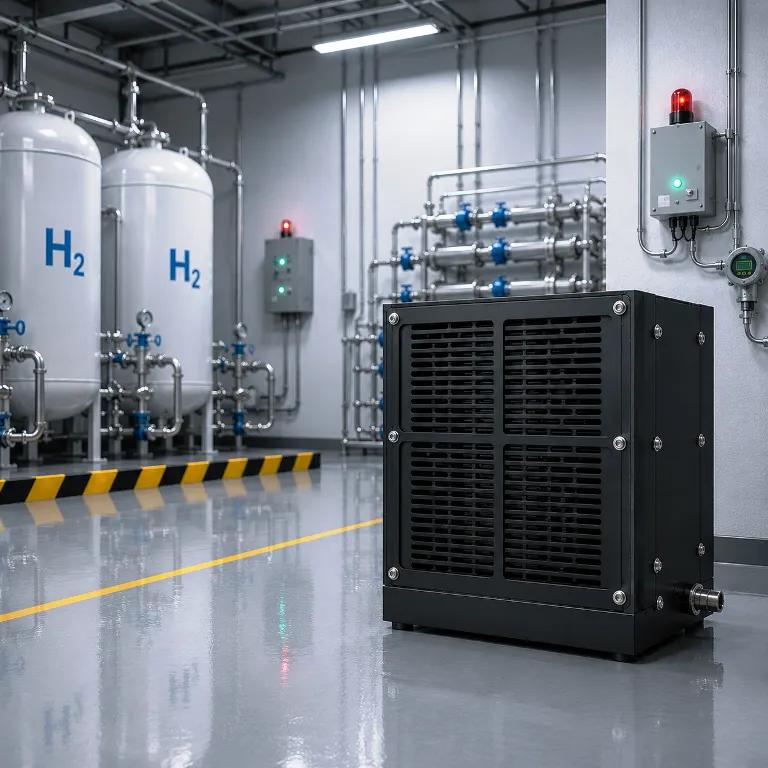
Air Cooled Fuel Cell Stack — fan or passive cooling, simpler BOP, lower system complexity
Higher power output requiring sustained thermal stability under continuous load
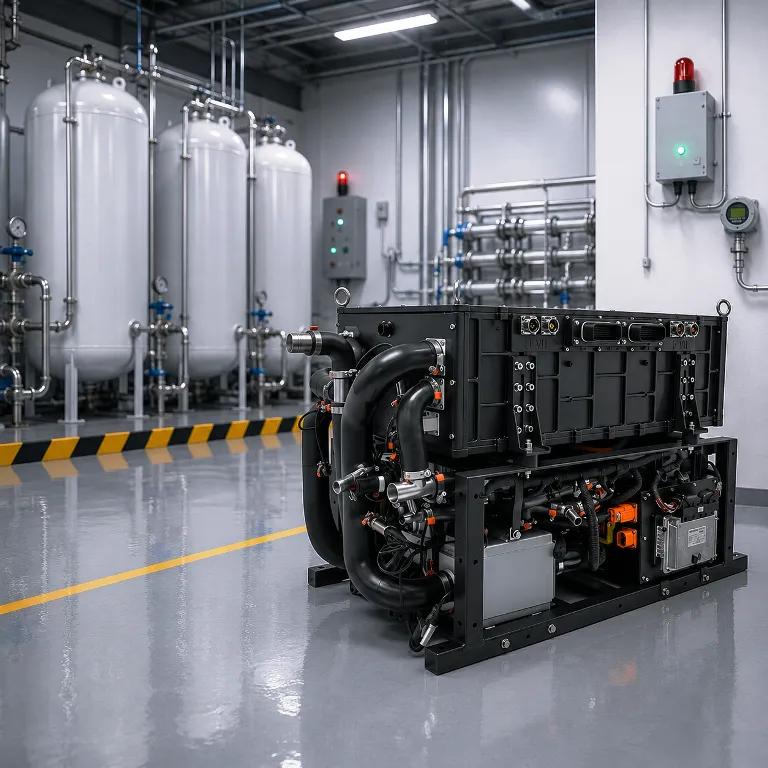
Liquid Cooled Fuel Cell Stack — active coolant loop, stable operating temperature, scalable to higher power
Extended flight endurance for UAVs or unmanned aerial systems
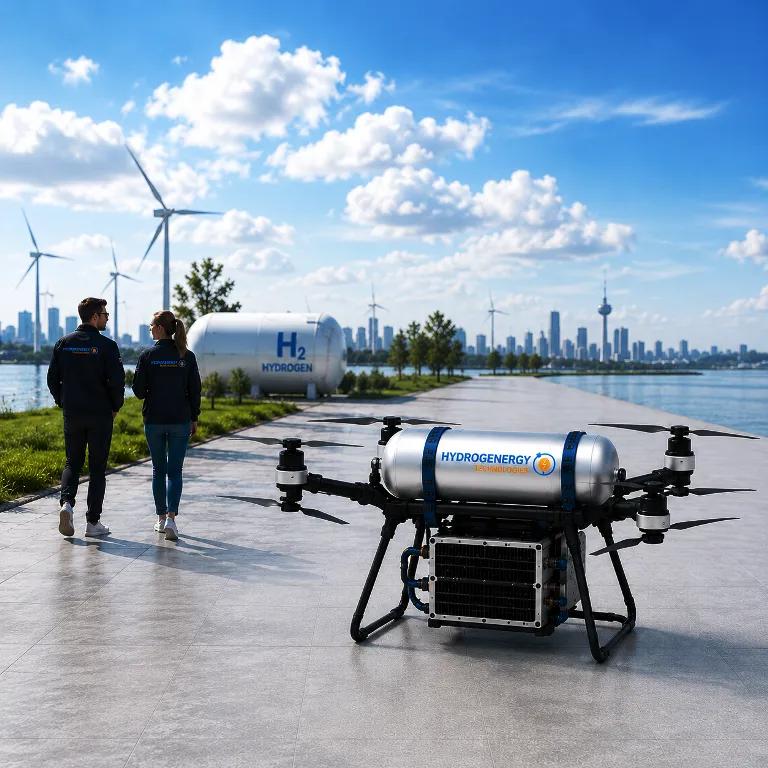
Drone Fuel Cell System — high power-to-weight ratio, lightweight hydrogen storage integration, longer missions than battery
Hydrogen propulsion or range extension for cars, trucks or commercial vehicles
Vehicle Fuel Cell Stack — high power density, engineered for traction loads and dynamic duty cycles
Zero-emission power for bicycles or light personal mobility platforms
Bicycle Fuel Cell System — compact, low noise, lightweight, suitable for urban and last-mile applications
Stack testing, MEA characterisation or fuel cell R&D
Air or Liquid Cooled Stack — bare or instrumented configurations for test bench integration

Frequently asked questions

What is the difference between air cooled and liquid cooled fuel cell stacks?
Air cooled stacks use ambient air or a fan to remove heat from the stack — simpler, lighter, and lower in system complexity, but suited to lower power ranges where heat generation is manageable. Liquid cooled stacks circulate a coolant through internal channels to maintain stable operating temperature under higher loads. For sustained high-power operation, liquid cooling is necessary to prevent membrane degradation and maintain performance.
What hydrogen purity does a PEM fuel cell require?
PEM fuel cells require high-purity hydrogen — typically 99.97% minimum (ISO 14687 Grade D or higher). Contaminants including carbon monoxide, sulphur compounds and ammonia can poison the platinum catalyst in the MEA, causing irreversible performance loss. For systems where supply purity cannot be guaranteed, an inline purifier or hydrogen purity analyser upstream of the stack is strongly recommended.
How are drone fuel cells different from standard PEM stacks?
Drone fuel cell systems are engineered specifically for aerial applications — minimising weight, integrating hydrogen storage within tight volume constraints, and delivering high power-to-weight ratios that standard ground-based stacks are not optimised for. They typically include a compressed hydrogen cartridge or canister, lightweight stack, and power management electronics in a single integrated unit designed for UAV mounting.
Can a fuel cell be integrated with an electrolyzer in the same system?
Yes — electrolyzer and fuel cell together form a complete hydrogen energy cycle. The electrolyzer produces hydrogen from water using electricity; the fuel cell converts stored hydrogen back to electricity on demand. This combination is used in off-grid energy storage systems, hydrogen demonstrators, power-to-gas-to-power research platforms, and closed-loop hydrogen energy installations. Hydrogenergy supplies both sides of this system.
How long does a fuel cell stack last?
Stack lifetime depends on operating conditions, load cycling, shutdown procedures, and hydrogen quality. Well-maintained PEM stacks in stationary applications can exceed 20,000 hours. Mobile and drone stacks typically see shorter operational life due to dynamic loading and environmental exposure. MEA replacement or stack refurbishment can extend service life when membrane or catalyst degradation is identified.
Need help choosing?
Our engineers will recommend the right fuel cells for your application.
Talk to an Engineer →