H₂ Products

All Products
Electrolyzers
Fuel Cells
H₂ Leak Detectors
Dew Point Meters
Hydrogen Purity Analyzers
Mass Flow Controllers
Digital Pressure Gauges
MEA & Materials

Can't find what you need? We source custom components.

Custom Request →
Mass flow controllers (mems)
H₂ Products · Mass Flow Controllers

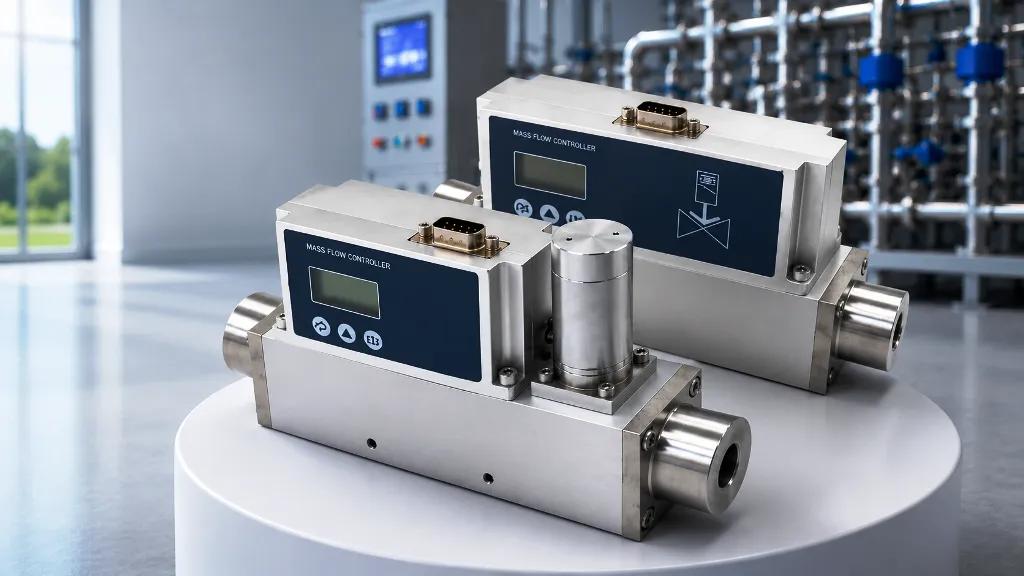
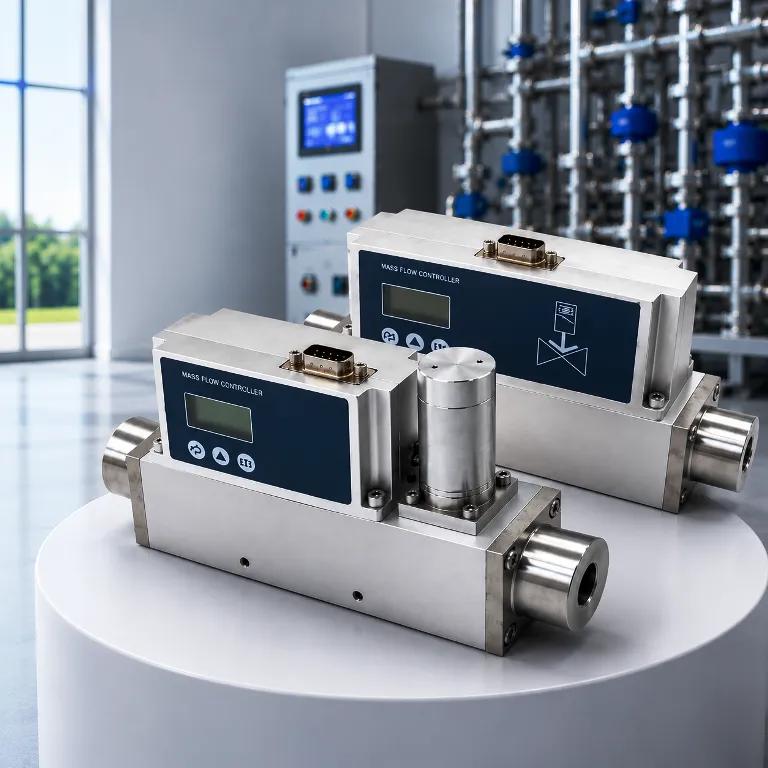
Mass Flow Controllers & Mass Flow Meters

Thermal · Coriolis · Digital · MEMS

Precise hydrogen flow measurement and control for test stations, electrolyzer systems, fuel cell test benches, process gas supply and analytical instrumentation. Thermal and Coriolis mass flow controllers and meters — across a wide range of flow rates, pressures and gas types.

What is a Mass Flow Controller?

Control the flow. Control the process.

A mass flow controller (MFC) is a precision instrument that measures and controls the mass flow rate of a gas — independent of changes in temperature and pressure. Unlike volumetric flow measurement, which varies with gas conditions, mass flow measurement is a direct measure of the actual quantity of gas passing through the instrument, making it the preferred method for any application where accurate, repeatable gas delivery is required.

Mass flow controllers combine a flow sensor with an integrated control valve and feedback loop — continuously measuring flow and adjusting the valve position to maintain the setpoint. Mass flow meters perform the measurement function only, without active flow control. Both instruments are available with analogue interfaces (0–5V, 1–5V, 0–10V, 4–20mA) and digital communication protocols (RS-232, RS-485, Modbus, DeviceNet) for integration into test and process systems.

In hydrogen applications, mass flow controllers are used throughout the system — at the electrolyzer inlet for water or gas supply control, at the fuel cell test bench for precise hydrogen and air delivery to the stack, at hydrogen dispensing and storage systems for filling control and custody transfer, and in analytical instruments where carrier gas flow accuracy directly affects measurement quality. The same instruments also serve multi-gas applications across nitrogen, oxygen, argon, helium and process gas mixtures. Hydrogenergy supplies mass flow controllers and meters across a wide range of flow capacities and interface options, with technical support for instrument selection and system integration.

Which mass flow controller is right for you?

Precise hydrogen flow control to a fuel cell stack or electrolyzer at low to mid flow rates
Thermal Mass Flow Controller — accurate, fast response, available in a wide range of flow capacities
Flow measurement only — no active control required
Mass Flow Meter — sensor and display only, lower cost where control valve is not needed
High-accuracy flow measurement for high flow rates or dense gas streams
Coriolis Mass Flow Controller — direct mass measurement, unaffected by gas composition changes
Integration into a PLC, data acquisition or test automation system
Digital MFC — RS-485, Modbus or DeviceNet interface for direct system integration and remote setpoint control
Simple analogue setpoint control from a test station or bench power supply
Analogue MFC — 0–5V or 4–20mA setpoint and readback, straightforward wiring and operation
Multi-gas flow control across hydrogen, nitrogen, air and other gases in the same system
Multi-gas MFC — configurable gas correction factors, suitable for mixed-gas test environments

Frequently asked questions

What is the difference between a mass flow controller and a mass flow meter?
A mass flow meter measures the mass flow rate of a gas and outputs the reading — it has no control function. A mass flow controller includes an integrated control valve and closed-loop feedback, actively regulating flow to maintain a user-defined setpoint. If you need to measure flow only, a meter is sufficient. If you need to set and maintain a specific flow rate — as in fuel cell testing or electrolyzer control — a controller is required.
Why is mass flow measurement preferred over volumetric flow for hydrogen?
Volumetric flow measurements — litres per minute, cubic metres per hour — vary with gas temperature and pressure. The same volumetric reading at two different pressures represents different quantities of gas. Mass flow is independent of these conditions, measuring the actual quantity of gas regardless of temperature and pressure variations. For processes where the amount of gas consumed or delivered matters — fuel cell testing, electrolyzer control, gas chromatography — mass flow is the correct measurement parameter.
What flow ranges are available for hydrogen mass flow controllers?
Hydrogen mass flow controllers are available across an extremely wide range — from under 1 standard millilitre per minute (sccm) for micro-flow analytical applications, to hundreds of standard litres per minute (slm) for high-flow test station and industrial applications. Full-scale range selection should be matched to the actual operating flow — MFCs perform best when operating between 10% and 100% of full scale. Contact Hydrogenergy with your required flow range for appropriate instrument selection.
Can a mass flow controller be used with gases other than hydrogen?
Yes — thermal mass flow controllers can be used with a wide range of gases including nitrogen, oxygen, argon, helium, carbon dioxide, methane and mixed gases. Most instruments require a gas-specific calibration or correction factor to be applied, as thermal conductivity varies between gases. Many modern digital MFCs support multiple gas correction factors stored in the instrument, allowing the same unit to be switched between gases in the field.
What interface options are available for mass flow controllers?
Mass flow controllers are available with analogue interfaces — typically 0–5V DC, 1–5V DC or 4–20mA for setpoint input and flow readback — and digital communication interfaces including RS-232, RS-485, Modbus RTU and DeviceNet. Analogue units are simpler to wire and operate from standard bench supplies or test stations. Digital units offer remote configuration, real-time data logging, multi-drop addressing and integration with automation systems and data acquisition platforms.
Need help choosing?
Our engineers will recommend the right mass flow controllers for your application.
Talk to an Engineer →