H₂ Products

All Products
Electrolyzers
Fuel Cells
H₂ Leak Detectors
Dew Point Meters
Hydrogen Purity Analyzers
Mass Flow Controllers
Digital Pressure Gauges
MEA & Materials

Can't find what you need? We source custom components.

Custom Request →
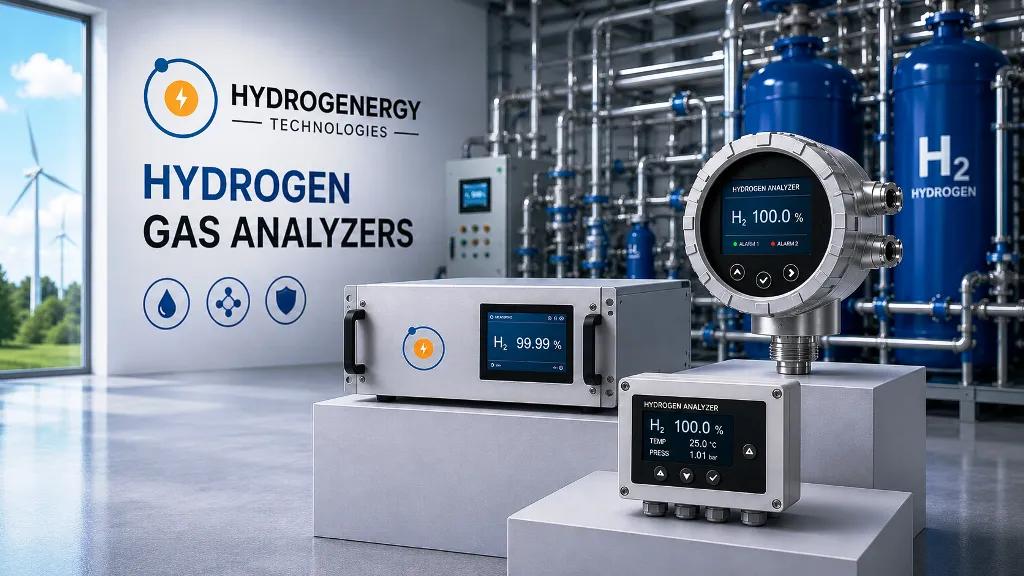
Hydrogen Gas Analyzer
H₂ Products · Hydrogen Purity Analyzers

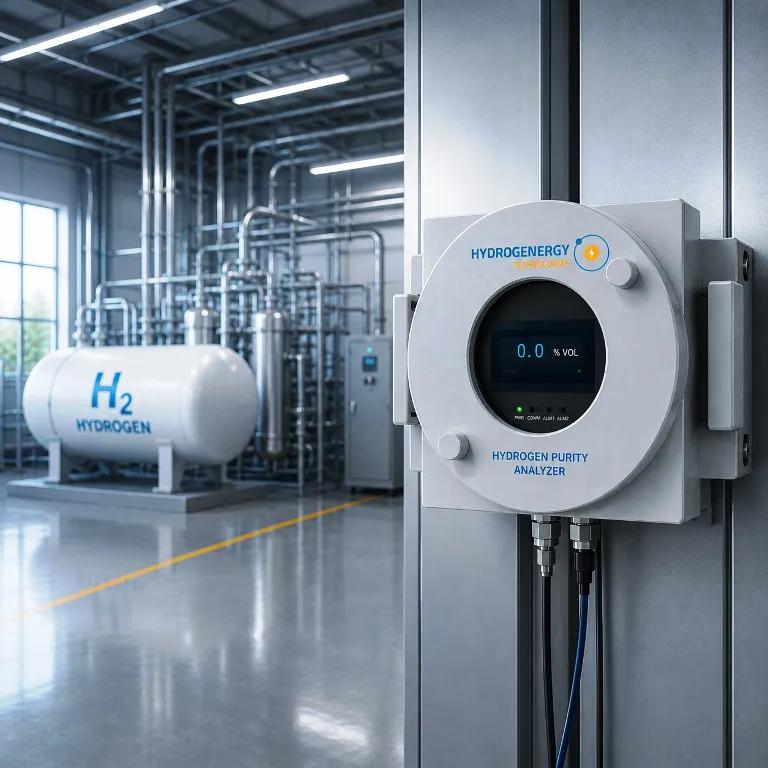
Hydrogen Purity Analyzers

TCD · Thermal Conductivity · Electrochemical

Hydrogen purity measurement for electrolyzer outlets, fuelling stations, industrial gas supply and quality compliance verification. Fixed, portable and inline analyzers for hydrogen purity from percent-level to 99.9999% — with traceable calibration and full specifications.

What is a Hydrogen Purity Analyzer?

Know hydrogen purity. Protect your system.

A hydrogen purity analyzer is an instrument that measures the concentration of hydrogen in a gas stream — or conversely, the level of impurities present — to verify that the gas meets the required quality specification for its intended application. Hydrogen purity is not a single fixed requirement: it varies significantly depending on whether the hydrogen is being used in a fuel cell stack, a hydrogen vehicle dispenser, an industrial process, or an analytical instrument.

PEM fuel cells are particularly sensitive to gas quality. Contaminants including oxygen, nitrogen, carbon monoxide, carbon dioxide, sulphur compounds and moisture can poison the platinum catalyst in the membrane electrode assembly, causing irreversible performance degradation. ISO 14687 defines purity grades for hydrogen fuel — from Grade C (99.9%) through to Grade D (99.97%) for fuel cell vehicles — with individual contaminant limits that a simple purity percentage alone does not capture.

Hydrogen purity analyzers measure total hydrogen concentration using thermal conductivity detection (TCD), electrochemical sensing, or gas chromatography-based methods depending on the required accuracy, concentration range and contaminants of interest. They are deployed at electrolyzer and hydrogen generator outlets to verify production quality, at compression and storage interfaces, at fuelling station dispensers for compliance verification, and inline in industrial hydrogen supply systems. Hydrogenergy supplies hydrogen purity analyzers across fixed, portable and inline configurations for the full range of hydrogen quality measurement requirements.

Which hydrogen purity analyzer is right for you?

Verification of hydrogen purity at electrolyzer or generator outlet — percent level measurement
TCD Hydrogen Purity Analyzer — thermal conductivity detection, accurate across full 0–100% H₂ range
High-accuracy purity measurement for fuel cell grade hydrogen at 99.9% and above
Electrochemical or TCD Analyzer — high resolution at the upper purity range, suitable for ISO 14687 verification
Continuous inline purity monitoring integrated into a process or safety system
Inline Purity Transmitter — 4–20mA or digital output for process control and data logging integration
Portable spot-check purity measurement across multiple points or installations
Portable Hydrogen Purity Analyzer — handheld, battery operated, suitable for field and commissioning use
Purity verification at hydrogen fuelling station dispensers per regulatory requirements
Fixed Dispenser Purity Analyzer — designed for continuous monitoring at fuelling infrastructure
Detection of specific contaminants — oxygen, nitrogen, CO — in hydrogen supply
Multi-component Gas Analyzer — contact Hydrogenergy for appropriate instrument selection

Frequently asked questions

What purity grade of hydrogen is required for PEM fuel cells?
ISO 14687 specifies Grade D hydrogen for PEM fuel cell vehicles — a minimum of 99.97% hydrogen with strict individual limits on contaminants including total hydrocarbons, oxygen, nitrogen, carbon monoxide, carbon dioxide, sulphur compounds, formaldehyde, formic acid, ammonia, total halogens and particulates. For stationary PEM fuel cells and research stacks, requirements vary by manufacturer — consult the stack specification. A purity analyzer measures total hydrogen concentration; full ISO 14687 compliance requires contaminant-specific analysis.
What is thermal conductivity detection (TCD) and how does it measure hydrogen purity?
Thermal conductivity detection works on the principle that different gases conduct heat at different rates. Hydrogen has an exceptionally high thermal conductivity compared to air, nitrogen and most other gases. A TCD analyzer passes the sample gas over a heated sensing element and measures the rate of heat dissipation — which varies with hydrogen concentration. This makes TCD a highly effective and robust method for measuring hydrogen purity across the full concentration range from 0 to 100%.
What is the difference between a hydrogen purity analyzer and a hydrogen leak detector?
A hydrogen leak detector monitors ambient air for the presence of hydrogen — it detects whether hydrogen has escaped into the surrounding environment, typically measuring in parts per million or as a percentage of the Lower Explosive Limit. A hydrogen purity analyzer measures the composition of a hydrogen gas stream — it determines what percentage of the gas flowing through a pipe or system is actually hydrogen. The two instruments serve different functions and are used at different points in a hydrogen system.
Where should a hydrogen purity analyzer be installed?
The primary measurement point is at the outlet of the electrolyzer or hydrogen generator — downstream of the dryer and any purification stage — to confirm that produced hydrogen meets the required specification before entering storage or downstream equipment. Additional installation points include compression inlet and outlet, high-pressure storage outlet, and the dispenser at hydrogen fuelling stations. For critical applications, continuous inline monitoring is preferred over periodic spot-check measurement.
Can a purity analyzer measure gases other than hydrogen?
TCD-based analyzers can be configured for binary gas mixture analysis across a range of gas pairs — not only hydrogen in air or nitrogen, but other gas combinations where the two components have sufficiently different thermal conductivities. For multi-component gas analysis or specific contaminant measurement, a different instrument type is required. Contact Hydrogenergy with your gas composition and measurement requirement for appropriate instrument selection.
Need help choosing?
Our engineers will recommend the right hydrogen purity analyzers for your application.
Talk to an Engineer →