H₂ Products

All Products
Electrolyzers
Fuel Cells
H₂ Leak Detectors
Dew Point Meters
Hydrogen Purity Analyzers
Mass Flow Controllers
Digital Pressure Gauges
MEA & Materials

Can't find what you need? We source custom components.

Custom Request →
Fuel cell for Drones
Productsfuel cellsFuel Cells for Drones

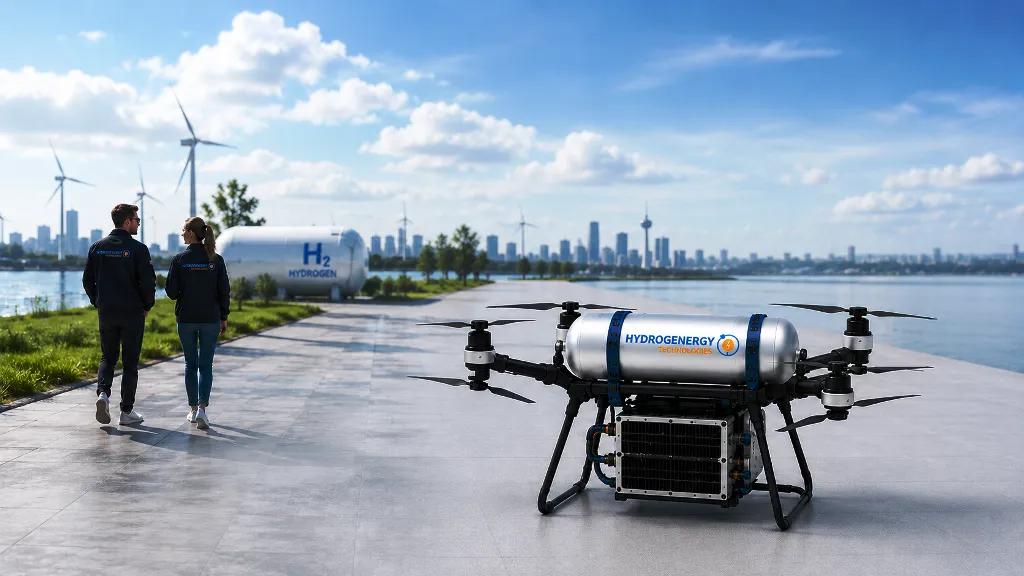
Hydrogen Fuel Cells for Drones & UAVs

3kW · 3.5kW · 5kW · 6kW · 10kW · 20kW

Air cooled hydrogen fuel cell stacks engineered for UAV and unmanned vehicle applications. High power-to-weight ratio of 1200W/kg, wide operating temperature range from -40°C to 40°C, and stable operation for 6000 hours — purpose-built for extended endurance drone missions where battery range is a limiting constraint.

Products

HYD-3000Hydrogen Fuel Cell

Air cooled hydrogen fuel cell stack for drone applications. 3kW rated power, 1200W/kg power-to-weight ratio. Engineered for extended UAV flight endurance.

Lead time: 6–10 weeks

Specifications
Rated Power3000 W
Peak Power3325 W
No-load Voltage70 V
Min. Voltage42 V
Rated Voltage45.5 V
Rated Current66 A
H₂ Consumption Rate37 NL/min
Hydrogen Pressure50 kPa (±10%)
Operating Temperature-40°C to 40°C
Power-to-Weight Ratio1200 W/kg
Power-to-Volume Ratio450 W/L (±10%)
Lifespan6000 hours
Dimensions (with fan)175 × 155 × 255 mm
Weight2400 g
ApplicationDrone, unmanned vehicle

What is a Fuel Cells for Drone?

A hydrogen fuel cell drone power system replaces or supplements the lithium battery pack in a UAV with a hydrogen fuel cell stack — converting hydrogen gas directly into electricity to drive the motors, with water vapour as the only byproduct. The result is a significant increase in flight endurance: hydrogen fuel cells offer three to five times the energy density of lithium batteries by weight, enabling missions that are simply not achievable with battery power alone.

The HYD series fuel cell stacks supplied by Hydrogenergy are air cooled units specifically rated for aerial and unmanned vehicle applications. With a power-to-weight ratio of 1200W/kg and a power-to-volume ratio of 450W/L, they are among the most compact and lightweight fuel cell stacks available in the 3kW–20kW range. The wide operating temperature range — from -40°C to 40°C — ensures reliable performance in varied outdoor conditions, from cold-weather surveying to high-altitude operations.

HYD series stacks produce DC power output matched to the drone's power bus. A 48V fan system manages thermal regulation. Hydrogen is supplied from a lightweight compressed hydrogen cylinder or cartridge carried on the drone, regulated to the stack inlet pressure of 50kPa (±10%). All stacks have been certified under ISO9001, ISO14001 and ISO45001 quality and environmental management systems.

Applications

Extended endurance UAV and drone power
Long-range aerial survey and inspection
Unmanned vehicle and ground robot power
Base station and remote power supply
Search and rescue UAV operations
Agricultural drone extended flight
Defence and surveillance UAV systems

Frequently asked questions

Why use a hydrogen fuel cell instead of a battery for drones?
Lithium batteries are limited by energy density — a fully charged battery pack can typically sustain 20–30 minutes of flight. Hydrogen fuel cells offer three to five times higher energy density by weight, enabling flight times of 2–4 hours or more depending on the drone and mission profile. Hydrogen can also be replenished in minutes by swapping a cylinder, unlike batteries which require hours to recharge. For commercial survey, inspection, delivery and defence applications where endurance is critical, hydrogen fuel cells are the enabling technology.
What hydrogen pressure does the HYD series stack require?
HYD series stacks require hydrogen at 50kPa gauge pressure (±10%) at the inlet — approximately 0.5 bar. This is supplied by a lightweight compressed hydrogen cylinder with a pressure regulator set to this delivery pressure. The low inlet pressure requirement simplifies the hydrogen supply system and allows use of compact, lightweight cylinder and regulator assemblies suitable for UAV integration.
What is the operating temperature range of HYD series drone fuel cells?
HYD series stacks operate in ambient temperatures from -40°C to 40°C — a significantly wider range than standard PEM fuel cell stacks, which typically require ambient temperatures above 5°C. This makes HYD stacks suitable for cold-weather operations, high-altitude missions and outdoor deployments where ambient temperature control is not possible.
How long do HYD series fuel cell stacks last?
HYD series stacks are rated for stable operation for 6000 hours. Actual lifetime depends on operating conditions, hydrogen quality, and load cycling profile. Operating consistently within the rated power range and with hydrogen at the specified purity (>99.99%) will maximise stack lifetime. MEA degradation is the primary ageing mechanism — contact Hydrogenergy for MEA replacement and stack refurbishment options.
What power range is available for drone fuel cells?
The HYD drone series covers 3kW to 20kW rated output — spanning light commercial UAVs at 3kW through to heavy-lift and long-endurance platforms at 10kW and 20kW. Peak power is available above rated for short durations. Select the stack based on your drone's maximum continuous power draw plus a 20% safety margin. Contact Hydrogenergy for application-specific power system sizing guidance.
Need help choosing the right model?
Our engineers will recommend the right fuel cells for drones for your application.
Talk to an Engineer →