Quick Definition
A Solid Oxide Electrolyzer (SOEC) is a high-temperature water electrolysis system that uses a solid ceramic electrolyte to split steam into hydrogen and oxygen. Operating typically between 700°C and 1000°C, SOECs use both electricity and heat, enabling higher electrical efficiency than conventional low-temperature electrolyzers and making them well suited for large-scale, industrial green hydrogen production.
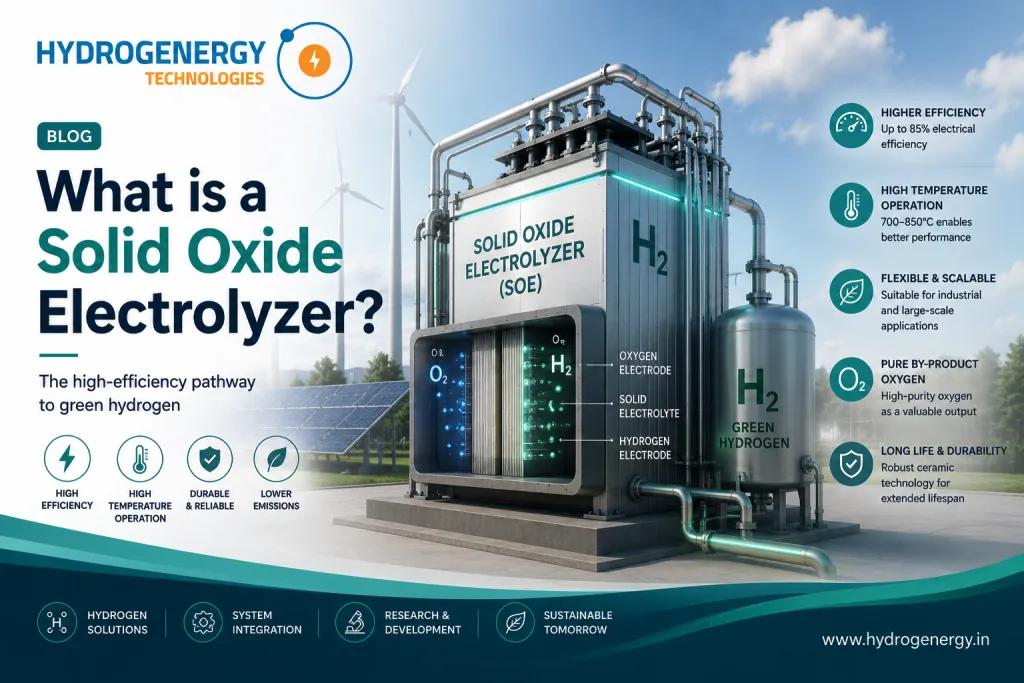
Solid oxide electrolyzers represent a genuinely different approach to producing hydrogen than the low-temperature electrolyzers most people encounter first, PEM and alkaline systems. Rather than relying almost entirely on electrical energy to split water at room temperature, SOECs run at temperatures hot enough to glow, using heat itself as part of the energy input. This article covers how that works, how SOEC stacks up against PEM in practice, and where the real, named companies building this technology actually stand in 2026, including some genuine setbacks alongside the progress.
How a Solid Oxide Electrolyzer Works
An SOEC has three key components. The cathode, typically made from nickel-yttria stabilized zirconia (Ni-YSZ), is where steam is split, releasing hydrogen gas and oxygen ions while blocking electrons. The electrolyte, usually a dense ceramic membrane of yttria-stabilized zirconia (YSZ), allows those oxygen ions to migrate through it under the applied electrical field while acting as an insulator to electrons. The anode, often made from strontium-doped lanthanum manganite (LSM), is where the migrated oxygen ions arrive, combine with available electrons, and are released as oxygen gas.
The process runs in four steps. First, an external DC power source, ideally from renewable electricity, drives the electrolysis. Second, at the high operating temperature, steam near the cathode splits into hydrogen gas and oxygen ions. Third, those oxygen ions, highly mobile at these temperatures, migrate through the YSZ electrolyte toward the anode. Fourth, at the anode, the oxygen ions release their electrons and combine to form oxygen gas, completing the circuit.
Why High Temperature Matters
Operating at 700 to 1000°C, rather than the 50 to 80°C typical of PEM electrolyzers, unlocks three real advantages.
Higher efficiency, since the thermal energy already present at operating temperature supplements the electrical energy that would otherwise be needed entirely from the power source. This is why SOEC efficiency can reach up to roughly 90%, compared to 60 to 70% for PEM electrolyzers, a meaningful difference at industrial scale.
Feedstock flexibility, since SOECs tolerate impurities in the feedstock better than PEM systems, which require ultra-pure water to avoid membrane degradation. This makes SOEC compatible with a wider range of steam sources, including some derived from biomass gasification, a route explored further in our comparison of electrolysis, SMR, and biomass gasification.
Waste heat integration, since SOEC's high operating temperature allows it to be paired with existing industrial processes that already generate waste heat (steel furnaces, cement kilns, combined heat and power systems), using that heat to offset a portion of the energy SOEC would otherwise need to generate itself.
SOEC vs. PEM: A Practical Comparison
SOEC vs. PEM: A Practical Comparison
| Factor | SOEC | PEM |
|---|---|---|
| Operating temperature | 700 to 1000°C | 50 to 80°C |
| Typical efficiency | Up to ~90% | ~60 to 70% |
| Feedstock purity requirement | Tolerates some impurities | Requires ultra-pure water |
| Startup speed | Slower | Fast |
| Renewable energy compatibility | Better suited to steady, continuous operation | Better suited to intermittent, variable input |
| Typical scale | Large-scale, centralized industrial | Adaptable to smaller, decentralized systems |
| Durability | Ceramic materials offer long lifespan potential, though degrade at high temperature over time | Membrane sensitive to impurities, needs more frequent maintenance |
| Commercial maturity (2026) | Emerging, GW-scale manufacturing investment underway, but recent strategic recalibration at some major players | Mature, widely commercially deployed |
The practical upshot: SOEC's efficiency advantage matters most where there's continuous industrial-scale demand and, ideally, existing waste heat to pair with it. PEM's faster response and lower feedstock requirements make it the more flexible choice for variable renewable input and smaller-scale or research applications, which is why it remains Hydrogenergy's primary electrolyzer offering today.
The Commercial Landscape in 2026
SOEC has moved meaningfully from lab-scale demonstration toward real industrial deployment over the past few years, though the picture is genuinely mixed rather than uniformly positive.
Bloom Energy operates a 4 MW solid oxide electrolyzer at NASA's Ames Research Center, commissioned in 2023, and has built out manufacturing capacity now approaching 2 GW per year, offering the Bloom Electrolyzer as a commercial product line.
Sunfire, a German company, installed a 2.6 MW SOEC plant at Neste's biorefinery in Rotterdam in 2023 as part of the European MultiPLHY project, and made a strategic decision in 2024 to spin off its fuel cell business entirely to concentrate on SOEC, reporting a backlog of over 800 MW.
Topsoe inaugurated a 500 MW-per-year SOEC production facility in Herning, Denmark in 2025, a genuinely large manufacturing commitment. However, in May 2026, Topsoe publicly announced a revised strategic pathway for SOEC commercialization, following a Strategic Roadmap Review, citing a challenging market outlook for clean hydrogen in key markets. Going forward, the company is focusing on partnerships and demonstration projects rather than the more aggressive commercialization timeline previously targeted.
Elcogen opened a 360 MW-per-year production line in Tallinn, Estonia in 2025, and Thyssenkrupp nucera is building a 300 MW-per-year SOEC plant in Germany based on licensed technology from Fraunhofer IKTS, while SolydEra operates a 75 MW-per-year facility in Italy.
Not every company has stayed the course. FuelCell Energy abandoned its solid oxide fuel cell platform in June 2025, taking a $64.5 million impairment charge as part of a broader restructuring toward its core carbonate fuel cell and electrolysis technologies.
Taken together, this is a technology with real, substantial manufacturing investment from multiple credible industrial players, but also a genuine reminder that commercialization timelines in emerging clean hydrogen technology aren't guaranteed, even well-funded, technically sound companies are recalibrating expectations as the broader clean hydrogen market outlook has proven more challenging than earlier projections assumed.
Challenges Standing Between SOEC and Wider Adoption
Materials degradation at sustained high operating temperature remains a genuine engineering challenge, and ongoing materials science research aims to develop components that hold up better over long operating lifetimes.
Higher upfront cost compared to PEM and alkaline systems continues to be a real barrier, particularly relevant given the market recalibration described above, since cost competitiveness matters more when overall market demand growth is slower than previously projected.
System integration complexity is a genuine consideration too, since realizing SOEC's waste-heat advantage requires careful engineering to actually pair the electrolyzer with a compatible heat source, rather than simply installing it as a standalone unit.
Where SOEC Fits Today
SOEC remains best suited to large-scale, continuous industrial applications, particularly where waste heat from an existing process is genuinely available to pair with it. It's a less natural fit for research and academic lab settings, smaller-scale deployments, or applications requiring fast response to variable renewable input, where PEM and alkaline technologies remain the more practical, commercially mature choice today.
Conclusion
Solid oxide electrolyzers represent a genuinely differentiated approach to hydrogen production, using high operating temperature to unlock efficiency and feedstock flexibility that low-temperature electrolyzers can't match. Real, substantial manufacturing investment from Bloom Energy, Sunfire, Topsoe, Elcogen and others shows this moving from lab concept toward industrial deployment, but Topsoe's 2026 recalibration and FuelCell Energy's platform abandonment are honest reminders that this remains an emerging technology navigating real commercial headwinds, not a guaranteed success story. For most applications outside large-scale, continuous industrial production with genuine waste-heat integration, PEM and alkaline electrolyzers remain the more practical, proven choice today.
Need help with your hydrogen project?
Our engineers respond within 24 hours with a recommendation.
Hydrogenergy Applications Engineering Team
Applications Engineering · Hydrogenergy Technologies
Hydrogenergy's applications engineering team designs and supplies hydrogen systems for research labs and industry across India — from components to complete commissioned setups.