H₂ Products

All Products
Electrolyzers
Fuel Cells
H₂ Leak Detectors
Dew Point Meters
Hydrogen Purity Analyzers
Mass Flow Controllers
Digital Pressure Gauges
MEA & Materials

Can't find what you need? We source custom components.

Custom Request →
Portable Hydrogen Leak Detectors
Productsleak detectorsPortable Hydrogen Leak Detectors

Portable Hydrogen Leak Detectors

Handheld · Battery Operated · Field Ready

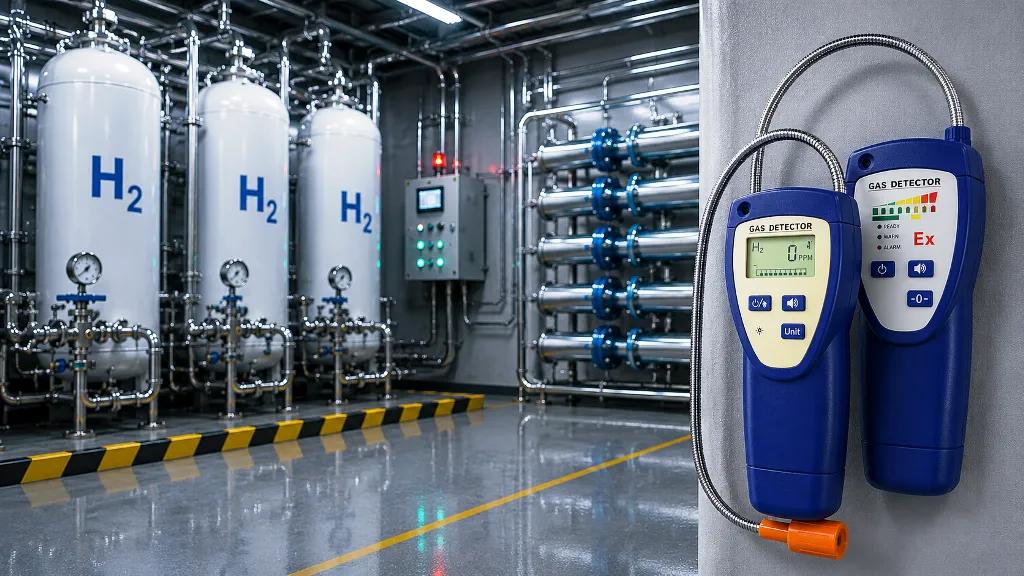
Handheld hydrogen leak detectors for field inspection, maintenance, commissioning and confined space entry verification. Battery-powered, compact and built for point-and-check leak survey work across industrial and laboratory hydrogen installations.

Products being added to this category.

Enquire directly →

What is a Portable Hydrogen Leak Detector?

A portable hydrogen leak detector is a handheld, battery-operated instrument used to identify hydrogen leaks at a specific point or across a survey route — rather than providing continuous monitoring at a single fixed location. Portable detectors are the primary tool for commissioning new hydrogen installations, conducting routine maintenance inspections, investigating suspected leaks, and verifying confined spaces are safe to enter before work begins.

Portable detectors use the same core sensing technologies as fixed installations — catalytic bead, electrochemical, or ultrasonic detection — packaged into a compact, rugged enclosure with a display, audible and visual alarms, and battery power for field use without mains connection. Response time, sensitivity and measurement range vary by sensing technology and model, allowing selection based on the specific inspection task.

Typical use cases include leak survey along pipework and fittings after installation or maintenance, point-checking suspected leak sources identified by fixed detectors or operator observation, pre-entry confined space verification, and periodic walk-around inspections of hydrogen storage and generation areas. Portable detectors complement fixed detection systems rather than replacing them — fixed detectors provide continuous unattended monitoring, while portable detectors provide on-demand, location-specific verification. Hydrogenergy supplies portable hydrogen leak detectors for field inspection, maintenance and safety verification across industrial and laboratory hydrogen installations.

Applications

Pipework and fitting leak survey
Confined space entry verification
Hydrogen system commissioning checks
Routine maintenance inspection
Point-checking suspected leak sources
Hydrogen storage and generation area walk-around inspection

Frequently asked questions

What is the difference between a portable and a fixed hydrogen detector?
A fixed detector is permanently installed at a specific monitoring point, wired into a control or alarm system, providing continuous unattended monitoring of that location. A portable detector is handheld and battery-operated, used for on-demand spot-checks, leak surveys and inspection work across multiple locations. Most hydrogen safety programmes use both — fixed detectors for continuous area monitoring and portable detectors for verification, maintenance and troubleshooting.
What sensing technology do portable hydrogen detectors use?
Portable hydrogen detectors are available with catalytic bead, electrochemical, or ultrasonic sensing technology — the same core technologies used in fixed installations, packaged for handheld field use. Catalytic bead units measure as a percentage of LEL for flammability assessment. Electrochemical units offer higher PPM-level sensitivity for trace leak detection. Selection depends on the specific inspection task and required sensitivity.
How long does the battery last on a portable hydrogen detector?
Battery life varies by model and sensing technology, typically ranging from 8 to 24 hours of continuous operation on a full charge. Electrochemical sensors generally offer longer battery life than catalytic bead units, as they do not require a continuously heated sensing element. Check the specific battery life rating for your selected model and plan inspection schedules accordingly.
How often should a portable hydrogen detector be calibrated?
Portable detectors require calibration on the same schedule as fixed units — typically every 3–6 months, with daily or pre-use bump testing recommended in active safety programmes. Since portable detectors are used across varied environments and handled frequently, more frequent functional verification is often warranted compared to fixed installations in controlled environments.
Can a portable detector be used for continuous monitoring?
Portable detectors are designed for on-demand, location-specific use rather than continuous unattended monitoring. While they can be left running for extended inspection periods, they lack the permanent installation, wired alarm integration and continuous power supply of fixed detectors. For locations requiring 24/7 monitoring, a fixed detector is the correct choice — portable units should supplement, not replace, fixed monitoring at critical points.
Need help choosing the right model?
Our engineers will recommend the right portable hydrogen leak detectors for your application.
Talk to an Engineer →