Products being added to this category.
Enquire directly →What is an Electrochemical Leak Detector?
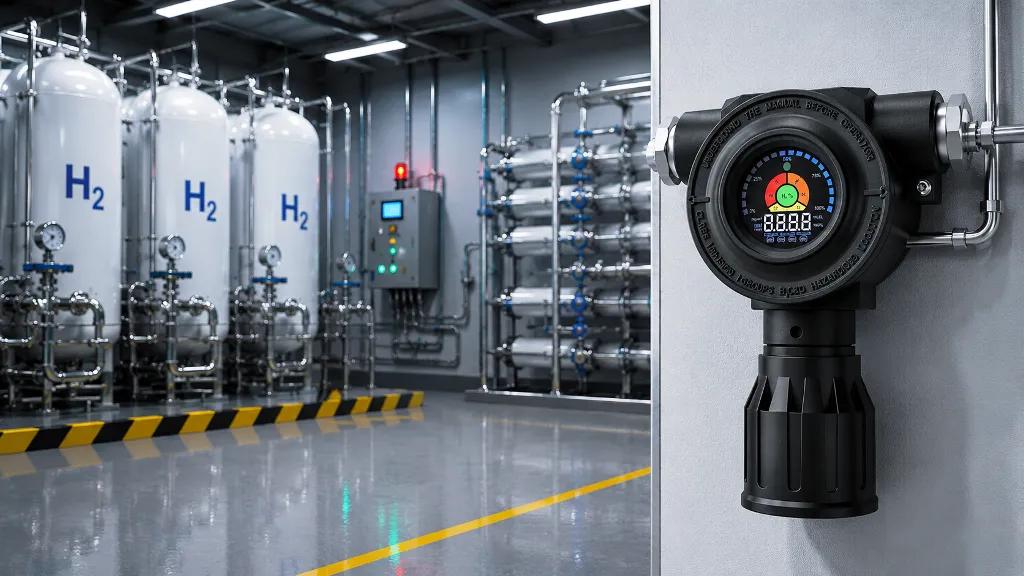
An electrochemical hydrogen detector measures gas concentration through an electrochemical reaction occurring within a sensor cell. Hydrogen diffuses through a membrane into the cell, where it is oxidised at a sensing electrode. This reaction generates a current proportional to the hydrogen concentration present, which is measured and converted into a gas concentration reading — typically expressed in parts per million (PPM) for low-concentration applications.
Electrochemical sensors offer significantly higher sensitivity than catalytic bead detectors, capable of detecting hydrogen at concentrations well below the percentages relevant to flammability. This makes them the preferred technology for applications where early detection at trace levels is the priority — identifying a developing leak long before it reaches a hazardous concentration, or monitoring background hydrogen levels in sensitive environments.
Electrochemical detectors typically consume less power than catalytic bead sensors, as they do not require a heated catalytic element. This makes them well suited for battery-powered portable instruments and low-power continuous monitoring installations. Sensor cells have a finite chemical life — typically one to two years depending on usage and environmental exposure — and require periodic replacement as part of routine maintenance. Hydrogenergy supplies electrochemical hydrogen detectors in fixed and portable configurations for precision safety monitoring applications.