Quick Definition
A fuel cell is a clean energy device that generates electricity by combining hydrogen and oxygen through an electrochemical reaction. It produces electricity with water and heat as the only by-products when powered by pure hydrogen, making it an efficient and environmentally friendly power source.
Understanding Fuel Cells: The Future of Clean Energy
A fuel cell is an electrochemical device that converts the chemical energy of a fuel (typically hydrogen) and an oxidizing agent (usually oxygen) into electricity through a pair of redox reactions. Unlike traditional combustion engines, fuel cells generate electricity without burning fuel, making them more efficient and environmentally friendly. The basic components of a fuel cell include an anode, a cathode, and an electrolyte that facilitates the movement of ions.
If you're evaluating fuel cell systems for your own application, Hydrogenergy supplies PEM Fuel Cells for stationary power, drones, vehicles and bicycles with full technical specifications and application support.
Why Fuel Cells Matter in 2026?
Fuel cells have been around for over a century, but the last few years have moved them from pilot projects to commercial deployment. Here's what's driving that shift:
- Environmental impact — Fuel cells produce electricity with water as the only byproduct when hydrogen is used as a fuel. This contrasts sharply with fossil fuels, which emit greenhouse gases and pollutants.
- Efficiency — Fuel cells convert chemical energy directly into electrical energy, bypassing the thermal energy stage that causes significant losses in combustion engines.
- Energy security — Hydrogen can be produced from various sources, including water electrolysis, natural gas reforming, and biomass. This versatility reduces dependence on a single energy source.
- Technological maturity — Materials science advances have meaningfully cut costs and improved durability since this article was first written in 2024.
- Policy support — India's National Green Hydrogen Mission continues to drive demand for fuel cell R&D and deployment; read our Mission overview blog for the latest details.
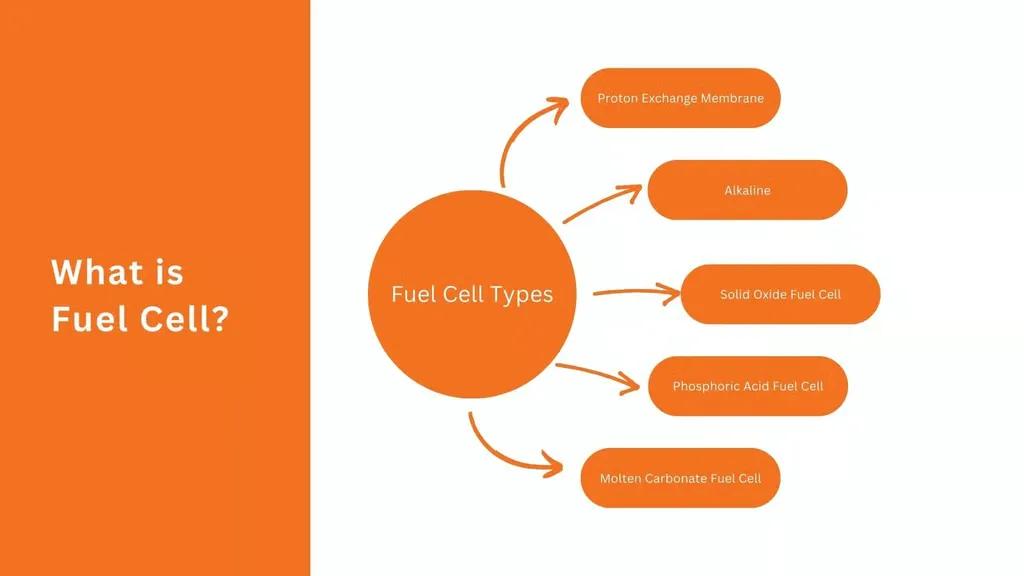
Different Types of Fuel Cells
Different Types of Fuel Cells — Comparison Table
| Type | Operating Temp | Key Advantage | Key Limitation |
|---|---|---|---|
| PEM (Proton Exchange Membrane) | Low (60–80°C) | High efficiency, fast startup, compact | Platinum catalyst cost; needs high-purity H₂ |
| SOFC (Solid Oxide) | Very high (800–1000°C) | Fuel flexible, high efficiency in CHP | Long startup time, needs robust materials |
| AFC (Alkaline) | Low–moderate | Low cost catalysts, high efficiency | CO₂ sensitive, needs pure gases |
| PAFC (Phosphoric Acid) | Moderate (150–200°C) | Good heat utilization for CHP | Larger, heavier, moderate efficiency |
| MCFC (Molten Carbonate) | High (600–700°C) | Fuel flexible, large-scale efficient | Corrosive electrolyte, complex design |
Future Scope, Usage, and Development
Fuel cells are poised to play a crucial role in the transition to a clean energy future, across:
- Transportation — Cars, buses, trucks, trains and ships. Adoption of fuel cell electric vehicles (FCEVs) continues to grow as refuelling infrastructure expands.
- Portable power — Reliable electricity for remote and off-grid applications, disaster relief, and areas without grid access.
- Stationary power generation — Continuous, reliable power for homes, commercial buildings and industrial facilities, especially in combined heat and power (CHP) configurations.
- Grid stabilization — Supporting renewable energy integration by providing reliable backup power and storage.
- Hydrogen economy — Fuel cells are central to hydrogen's role as a major energy carrier, alongside production, storage and distribution infrastructure. See our guide on hydrogen storage technologies.
Research and Development
- Cost reduction — Finding alternatives to expensive platinum catalysts and improving manufacturing processes.
- Durability and longevity — Materials research to withstand harsh operating conditions.
- Hydrogen production — Sustainable methods including electrolysis, biomass gasification, and photoelectrochemical water splitting.
- Infrastructure development — Refuelling stations, pipelines, and storage.
- Public policy — Continued government support remains critical for widespread adoption.
Conclusion
Fuel cells represent a proven, increasingly mainstream technology for a sustainable energy future. With high efficiency, versatility across applications, and low environmental impact, they're moving from pilot deployments to standard infrastructure across transportation and stationary power.
Need help with your hydrogen project?
Our engineers respond within 24 hours with a recommendation.

Hydrogenergy Applications Engineering Team
Applications Engineering · Hydrogenergy Technologies
Hydrogenergy's applications engineering team designs and supplies hydrogen systems for research labs and industry across India — from components to complete commissioned setups.