Quick Definition
Turquoise hydrogen is a low-carbon form of hydrogen produced by methane pyrolysis, a process that splits methane into hydrogen and solid carbon instead of carbon dioxide. When powered by renewable energy, it offers a cleaner alternative to conventional fossil fuel-based hydrogen production while generating a valuable solid carbon by-product.
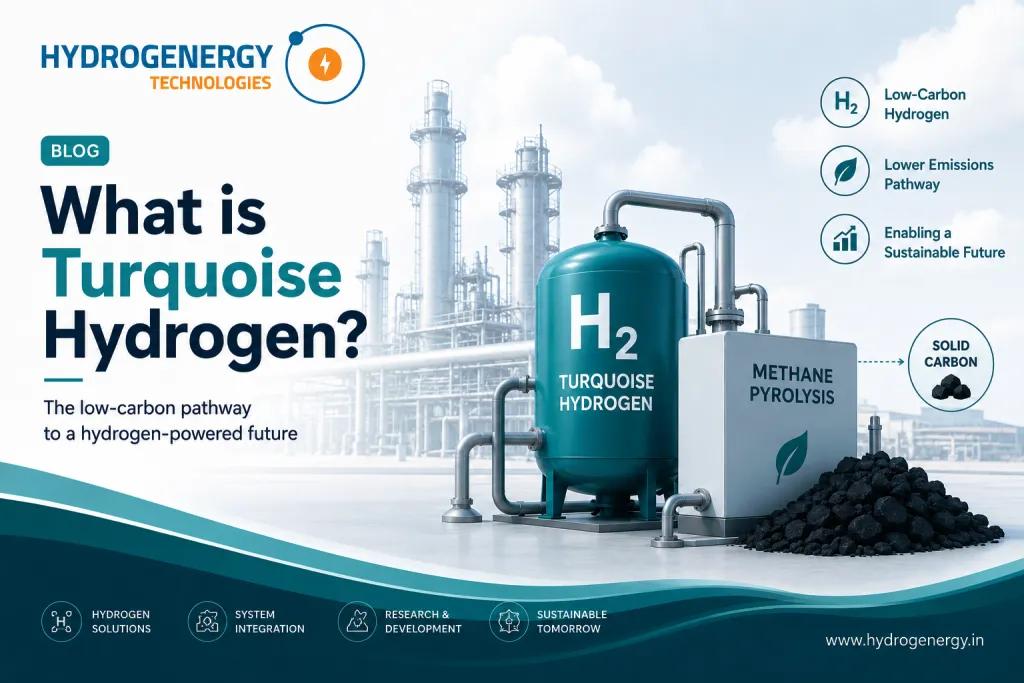
In the growing landscape of renewable energy, hydrogen is emerging as a pivotal component. Hydrogen is often categorized by colors to denote the production process and its environmental impact. While green, blue, and grey hydrogen are the most discussed, turquoise hydrogen, produced via methane pyrolysis, is moving from pilot demonstrations to genuine commercial operation. This article explores what turquoise hydrogen is, how it's produced, and where the technology actually stands in 2026.
Understanding Turquoise Hydrogen
Turquoise hydrogen refers to hydrogen produced via a process called methane pyrolysis. Methane, primarily found in natural gas, is decomposed into hydrogen and solid carbon. This method, which operates at high temperatures (around 1200°C in thermal plasma processes), uses heat to split methane into hydrogen and carbon.
This method stands apart from other processes because it produces solid carbon as a byproduct instead of carbon dioxide, which is typically produced in significant quantities by processes like steam methane reforming (SMR). For every 1 kg of hydrogen produced, methane pyrolysis generates roughly 3 kg of solid carbon, a ratio worth understanding since that carbon output needs a genuine market to remain a net environmental positive rather than a disposal burden.
The Science Behind Methane Pyrolysis
Methane pyrolysis involves the thermal decomposition of methane without the presence of oxygen. The reaction converts methane (CH4) into solid carbon (C) and hydrogen gas (2H2).
In traditional hydrogen production processes such as steam methane reforming, natural gas is reacted with water (steam), resulting in hydrogen and carbon dioxide emissions. Methane pyrolysis eliminates the carbon dioxide emission problem by converting the carbon into a solid form instead.
Several distinct technology approaches exist for breaking down methane, including thermal and catalytic reactors using plasma (hot, warm and cold), molten-media bubble columns, fluidized beds, and moving beds. Thermal plasma-arc reactor technology has the longest development history and remains the only approach currently operating at true commercial scale.
Comparing Turquoise Hydrogen with Other Hydrogen Colors
| Type | Production Method | CO2 Emissions | Byproduct | Maturity (2026) |
|---|---|---|---|---|
| Grey | Steam methane reforming (SMR) | High | None (CO2 released) | Fully mature, dominant globally |
| Blue | SMR + carbon capture | Low–moderate (capture-dependent) | Captured CO2 | Mature, scaling |
| Turquoise | Methane pyrolysis | Near-zero (if renewably powered) | Solid carbon | Commercial-scale operating (Monolith); emerging elsewhere |
| Green | Water Electrolysis | Zero | Oxygen, water | Fully mature |
Turquoise hydrogen sits between blue and green, often described as a bridge solution while renewable electricity and electrolyzer capacity continue scaling up to make green hydrogen more universally cost-competitive.
Benefits of Turquoise Hydrogen
Reduced Carbon Emissions
Methane pyrolysis prevents the release of greenhouse gases into the atmosphere by converting carbon into a solid form rather than CO2 gas. This makes turquoise hydrogen a potentially carbon-neutral option, provided the energy input comes from renewable sources, and carbon-negative if the feedstock itself is renewable natural gas (RNG) or biogas rather than conventional natural gas.
Versatile Byproduct (Solid Carbon)
The solid carbon byproduct can be used across industries: carbon black for tires, inks, plastics and batteries, construction materials, electronics, and soil amendment for agriculture. Monolith's carbon black, for instance, has been used in Goodyear's ElectricDrive tire line, demonstrating a genuine existing offtake market rather than a hypothetical one.
Energy Efficiency
Methane pyrolysis requires less energy compared to other hydrogen production methods, particularly electrolysis used for green hydrogen. Although the process operates at high temperatures, it is more energy-efficient than water splitting because it doesn't require the energy-intensive electrolysis process. Moreover, if the heat needed for methane pyrolysis comes from renewable energy sources, the overall process can be highly efficient and environmentally friendly.
Scalability
Turquoise hydrogen leverages existing natural gas infrastructure, making it easier to implement at scale using established supply chains compared to green hydrogen's dependency on new renewable electricity buildout.
Challenges and Limitations
High temperature requirements mean the process needs specialized equipment. Thermal plasma-arc systems in particular require significant capital investment and energy input to operate at the temperatures needed for efficient decomposition.
Energy source matters greatly. The sustainability of turquoise hydrogen depends heavily on the source of energy used for methane pyrolysis. If the process is powered by fossil fuels, it undermines the environmental benefit entirely.
Solid carbon handling remains a real commercial question. The solid carbon produced needs a genuine market to avoid becoming a disposal problem. This is precisely why offtake agreements (like Monolith's tire-industry carbon black sales) matter as much as the hydrogen production technology itself.
Commercial Progress in 2026
Turquoise hydrogen has moved meaningfully from pilot-scale demonstration toward genuine commercial deployment:
Monolith (United States) remains the most commercially advanced player, operating its Olive Creek facility in Hallam, Nebraska, the world's first commercial-scale methane pyrolysis plant, producing both hydrogen and carbon black at industrial volumes. Like any hydrogen production pathway, output typically still requires downstream purity-analyzers before use in sensitive applications such as fuel cells. The company continues to expand capacity at the site.
Hazer Group (Australia), a university spin-off focused on catalytic pyrolysis formed a strategic alliance with major engineering firm KBR in May 2025 to scale up its HAZER Process for commercial deployment, targeting disruption of the ammonia and methanol markets specifically.
ExxonMobil and BASF, in a clear signal that major oil and gas incumbents now see turquoise hydrogen as strategically relevant, the two companies announced in November 2025 plans to co-develop thermal methane pyrolysis technology, including a demonstration plant in Baytown, Texas, to validate the process at commercial scale.
This shift, from a field previously dominated by startups and SMEs to active involvement from major industrial and energy companies, marks turquoise hydrogen's transition from a promising concept to an actively-scaling technology.
Future Outlook
The future of turquoise hydrogen depends on continued technological refinement, energy policy support, and (critically) the continued development of a genuine commercial market for its solid carbon byproduct. While it's unlikely to fully replace green hydrogen long-term, its ability to leverage existing natural gas infrastructure makes it a pragmatic, scalable bridge technology in the short-to-medium term, particularly for hard-to-abate sectors like ammonia and methanol production where Hazer Group's KBR partnership is specifically targeting near-term impact.
Conclusion
Turquoise hydrogen represents a genuinely maturing approach to low-carbon hydrogen production, moving in 2026 from pilot demonstration into real commercial deployment, evidenced by Monolith's operating facility, Hazer Group's KBR alliance, and ExxonMobil/BASF's entry into the space. By converting methane into hydrogen and solid carbon rather than CO2, it offers a genuinely lower-carbon alternative that leverages existing natural gas infrastructure while the broader hydrogen economy continues to scale.
Need help with your hydrogen project?
Our engineers respond within 24 hours with a recommendation.
Hydrogenergy Applications Engineering Team
Applications Engineering · Hydrogenergy Technologies
Hydrogenergy's applications engineering team designs and supplies hydrogen systems for research labs and industry across India — from components to complete commissioned setups.