Quick Definition
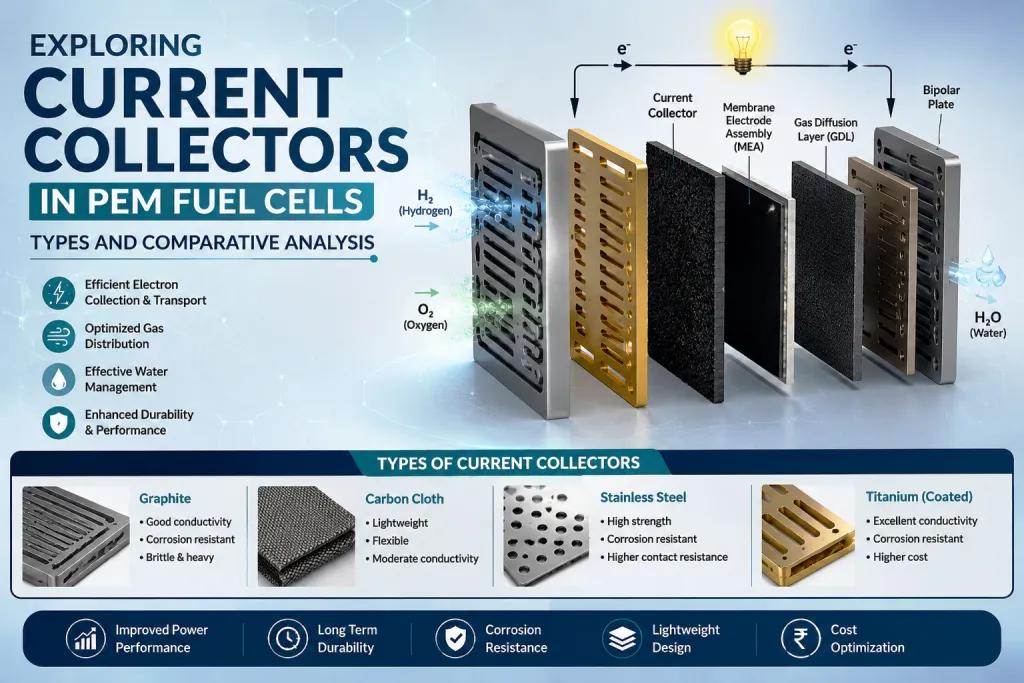
A current collector is a conductive component in a PEM fuel cell that gathers electrons from the electrodes and delivers them to the external electrical circuit. In practice, this role is split between two components working together, bipolar plates and gas diffusion layers, which also support gas distribution, water removal, and structural stability within the stack, ensuring efficient and reliable fuel cell operation.
Introduction
Within the intricate landscape of Proton Exchange Membrane (PEM) fuel cells, current collectors emerge as a pivotal component, handling electrical current collection, reactant distribution, and byproduct removal simultaneously. This article covers the two components that share this role, bipolar plates and gas diffusion layers (GDLs), unpacking their distinctive characteristics and comparing them across the factors that matter for real stack design decisions.
Bipolar Plates
Crafted from graphite, metal, or carbon composites, bipolar plates serve double duty as both current collectors and reactant distributors. Positioned between individual cells in a stack, they ensure effective electrical connectivity while also contributing structurally to the overall fuel cell stack. Bipolar plates offer excellent electrical conductivity and play a central role in overall fuel cell efficiency.
Material choice significantly shapes a bipolar plate's characteristics. Graphite plates offer excellent corrosion resistance and conductivity but are relatively heavy and brittle, making them better suited to stationary applications where weight matters less. Metal plates, typically stainless steel or titanium, are lighter and more durable but require protective coatings to resist corrosion in the fuel cell's operating environment. Composite plates blend polymer and conductive filler materials, aiming for a balance between weight, cost, and durability, and are increasingly common in automotive applications where weight is a genuine constraint.
Gas Diffusion Layers (GDLs)
Composed of porous materials like carbon paper or carbon cloth coated with conductive layers, GDLs act as conduits for reactant gases while also serving as electron collectors during the electrochemical reaction. Their high porosity enables efficient gas diffusion to the catalyst layer, while their electrical conductivity supports electron transfer to the bipolar plate. GDLs are slightly less conductive than bipolar plates but contribute meaningfully to reducing the fuel cell stack's overall weight.
GDLs typically include a microporous layer (MPL) coating on the side facing the catalyst layer, which improves water management by helping to wick product water away from the catalyst while still allowing reactant gas to pass through freely, directly addressing one of PEM fuel cells' most persistent operational challenges.
Comparing the Two
Comparing Bipolar Plates and Gas Diffusion Layers
| Factor | Bipolar Plates | Gas Diffusion Layers (GDLs) |
|---|---|---|
| Conductivity | High | Slightly lower, but sufficient for electron transfer |
| Weight | Heavier | Lighter, reduces overall stack weight |
| Cost | Generally more expensive, especially high-performance materials | Generally more cost-effective |
| Manufacturing complexity | Higher, intricate flow-field designs | Lower, simpler to manufacture and integrate |
| Efficiency contribution | Generally higher | Slightly lower, though still efficient |
| Durability | Generally robust and long-lasting | Can wear over time, impacting long-term durability |
| Corrosion resistance | Often better, especially graphite and coated metal | May need additional protective treatment |
How Material Choice Affects Performance
Beyond the bipolar-plate-versus-GDL comparison, the specific materials chosen for each component meaningfully affect real-world stack performance. Flow-field channel design on bipolar plates, whether straight, serpentine, or interdigitated, affects how evenly gas distributes across the active area, directly influencing efficiency and water management. On the GDL side, hydrophobic treatments (typically PTFE-based) help manage water removal, since a GDL that floods with product water blocks reactant gas from reaching the catalyst layer, degrading performance. Getting the combination of bipolar plate design and GDL properties right is genuinely a systems-engineering problem, not just a matter of picking the "best" individual component in isolation.
Hydrogenergy supplies MEA and materials including gas diffusion layers, bipolar plates, and complete membrane electrode assemblies for research and industrial fuel cell applications.
Conclusion
Bipolar plates and gas diffusion layers together form the current collection system that makes a PEM fuel cell stack function, each handling complementary roles in electron transport, gas distribution, and water management. Understanding the genuine trade-offs between them, and how material choice and design within each component affects real performance, is essential for anyone specifying or troubleshooting a fuel cell stack, whether for research, testing, or deployment.
Need help with your hydrogen project?
Our engineers respond within 24 hours with a recommendation.

Hydrogenergy Applications Engineering Team
Applications Engineering · Hydrogenergy Technologies
Hydrogenergy's applications engineering team designs and supplies hydrogen systems for research labs and industry across India — from components to complete commissioned setups.